
Lake Charles Previous Resident Sources
The backward trail changes with the date. Modern Lake Charles property work begins online, while an older address may send the searcher to a deed book, microfilm reel, map sheet, or archive box. The era table keeps ownership evidence, household evidence, and physical-place evidence separate.
| Source | Years It Covers | Where Held | What It Shows |
|---|---|---|---|
| Clerk conveyance index | Online 1987-present; archival and special series reach 1910 and earlier dates | Calcasieu Clerk eSearch, office, and archive | Recorded transfers and property interests |
| Clerk mortgage index | Online 1983-present; older archival runs include 1893-1896 | Clerk eSearch, office, and archive | Mortgages, liens, judgments, and encumbrances |
| Assessment and ownership display | Current dynamic tax years; 2023-2025 observed | Calcasieu Parish Assessor | Parcel, owner display, mailing and physical address, deed references |
| Lake Charles directories | 1895-1896 lead and scattered 1911-1960 runs with gaps | Calcasieu Library and outside microfilm collections | Edition-specific household or business names and addresses |
| Federal census | Public through 1950 under the 72-year rule | NARA, HeritageQuest, and Ancestry Library Edition | Household and place at the census date |
| GIS aerials and Sanborn map | Aerials 1940-2026; Sanborn set dated 1909 | Calcasieu GIS and Library of Congress | Structure, block, street, subdivision, and land-use change |
| Obituary and probate evidence | Collection and case specific | Library, newspapers, Clerk civil and successions | Death, relatives, heirs, and succession links |
For recent previous residents, anchor the current parcel and walk the conveyances backward. For a mid-century household, pair directory editions with the nearest public census and a map year. A pre-1910 question needs the Clerk archive, library, newspapers, Sanborn sheets, State Archives, and the processing status of McNeese's new title collection.
Anchor a Lake Charles Address
Old house numbers can fail in a modern portal. Use the Calcasieu Parish Assessor search to capture the current physical address, parcel number, subdivision, block, lot, section-township-range fields, legal description, deed references, and ownership-history dates. Then locate the same polygon in Calcasieu GIS. A legal description is often more durable than a street label.
The Assessor's mailing address may belong to an owner who lives elsewhere. Homestead status is an assessment clue, not a full household list. GIS can confirm the shape and setting of the place, but it cannot name who lived there. These limits matter when the goal is previous residents rather than prior title alone.
Process: old address → current parcel → legal description → deed reference → dated name record.
Walk Calcasieu Deeds Backward
The Calcasieu Parish Clerk is the recorder for Lake Charles property. Its conveyance index covers deeds and other transfers, while mortgages and liens sit in a separate index. Begin with today's owner and the Assessor deed reference. Then follow each instrument to the prior party while checking that the legal description still matches.
- Copy the current owner, parcel number, legal description, subdivision, and deed details from the Assessor record.
- Open Clerk eSearch and locate the current owner's acquisition in Conveyances. Record the grantor, grantee, instrument type, date, and book/page.
- Search that grantor as an earlier grantee. Confirm the same lot, block, subdivision, or other legal description before accepting the link.
- Repeat the sequence. Treat donations, partitions, successions, corrections, and entity transfers according to their actual instrument type.
- When the online range ends, request the Clerk's in-office index, archive, deed books, microfilm, or a certified search for the defined name and tract.
- Grantor / grantee
- The grantor gives or transfers an interest; the grantee receives it.
- Chain of title
- The linked sequence of recorded transfers for the same land.
- Legal description
- The lot, block, subdivision, tract, or survey wording that identifies land even when its street address changes.
The official login is the gate to the available land indexes. See the Clerk eSearch source before choosing an account or office route.
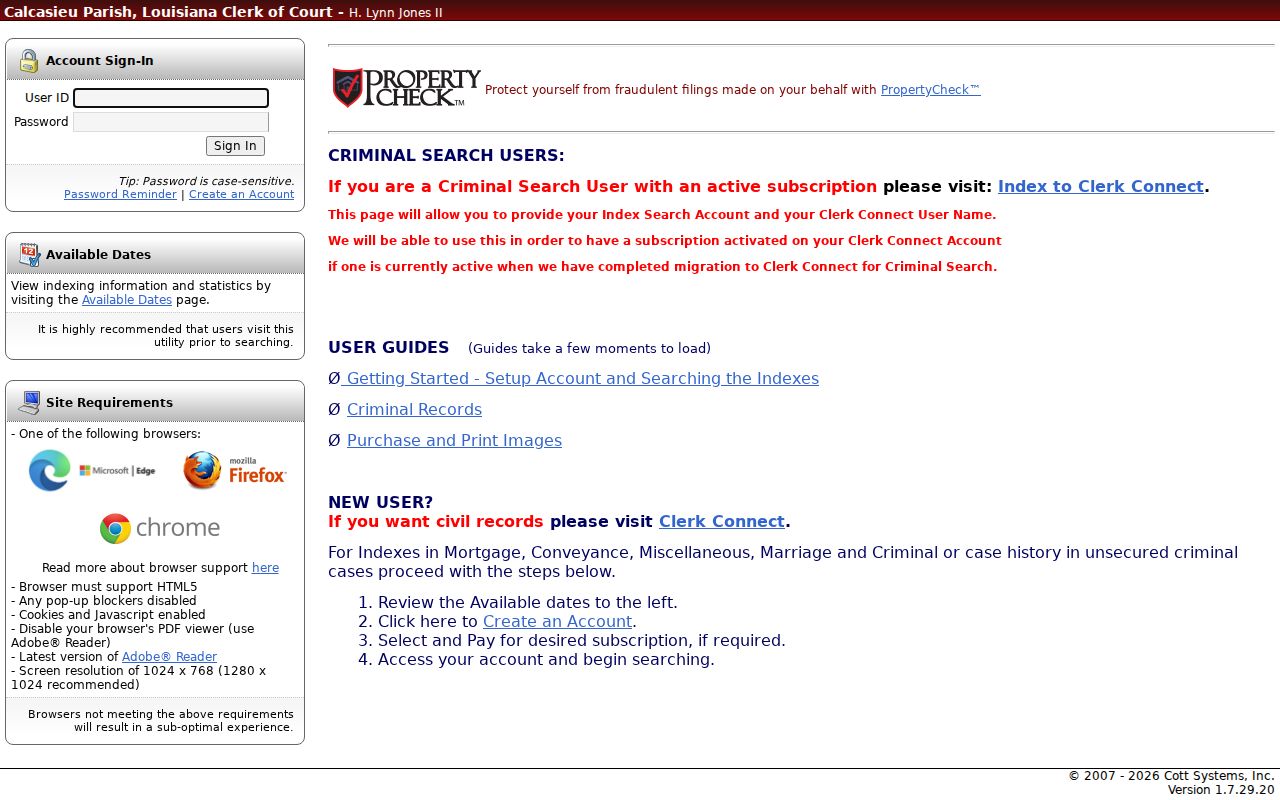
Its name-led design is why a current owner and deed reference should be gathered before the backward search begins.
Lake Charles Index Date Gaps
The Clerk's Available Dates table is more reliable than assuming one digitization cutoff. Current listings put conveyances at 1987-present, mortgages at 1983-present, plats at 1910-present, marriages at 1987-present, miscellaneous at 2000-present, and UCC at 2000-present. Specialized archival series begin at other dates, including late nineteenth-century mortgage runs and material around 1908-1910.
The captured table shows why previous-resident work must name the index family. Review the live category dates before deciding that an old record is absent.
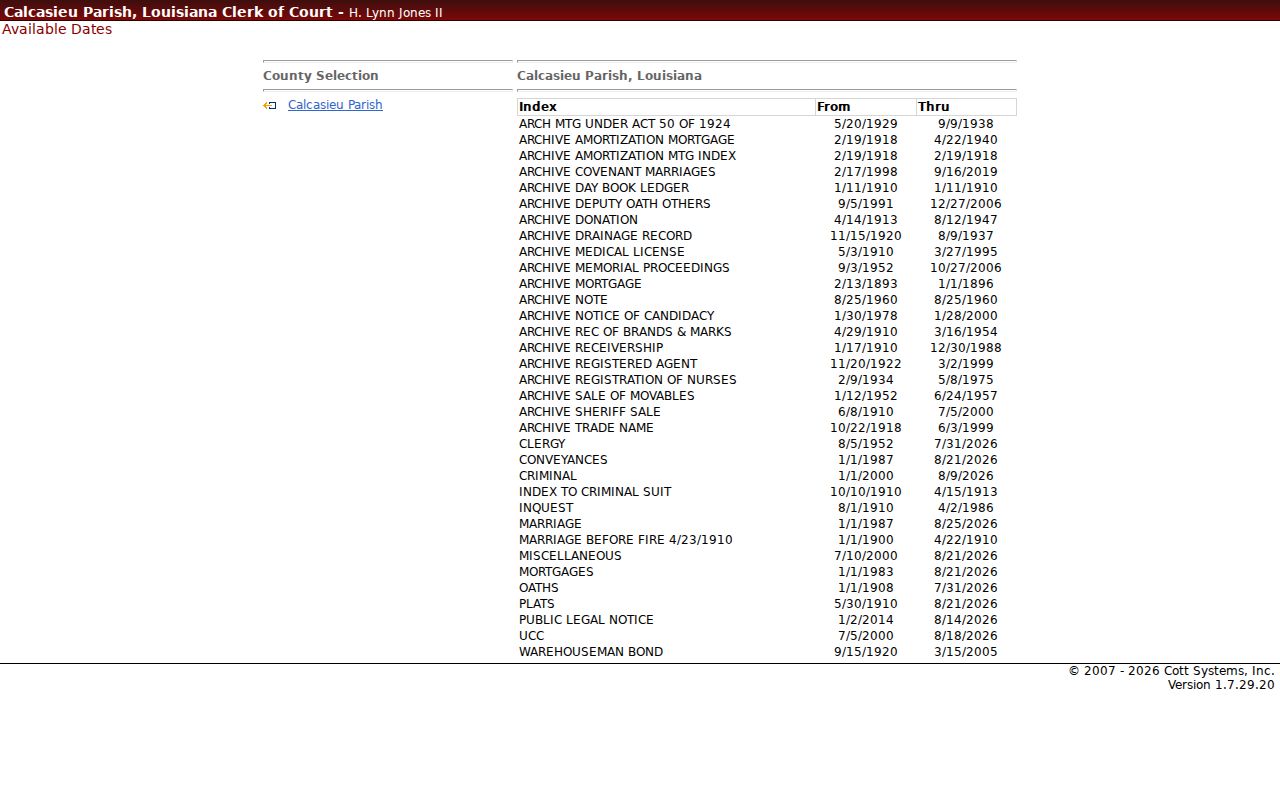
An empty web result can mean the year belongs in a different series, book, archive, or office terminal.
Map Past Lake Charles Homes
The 1909 Library of Congress Sanborn collection has 39 Lake Charles sheets. It can show a block, footprint, street label, and building use near the date of an early directory entry. Calcasieu GIS supplies a long aerial run: 1940, 1953, 1963, 1974-75, 1981, 1983, 1998, and many newer dates through 2026. Compare a mapped place with the closest deed and name-bearing source.
No complete official street-renaming, numbering, or annexation chronology was located. Bridge a suspected change through adjacent directory years, Clerk legal descriptions, subdivision plats, Sanborn labels, GIS centerlines, and a focused City or Parish records request. Never assign a person from an image of a structure.
Pre-Fire Lake Charles Records
The 1910 courthouse fire created a real break in early Calcasieu research. Broad Clerk archive holdings reach 1910-1985, while selected series go earlier. A missing pre-fire deed or name may survive as an abstract, copy, map, newspaper item, cemetery record, or title-company file rather than in a neat online sequence.
McNeese announced its Loftin-Levingston Title Records acquisition in July 2026. The five-parish Imperial Calcasieu collection includes title abstracts and photocopies from the 1840s, maps, cemetery records, and pre-fire courthouse material. Public access was planned for fall 2026, with a contextual website expected later, so check current processing status before making a trip.
The archive announcement documents the scope and the planned access window. Read the McNeese pre-1910 collection notice for updates.
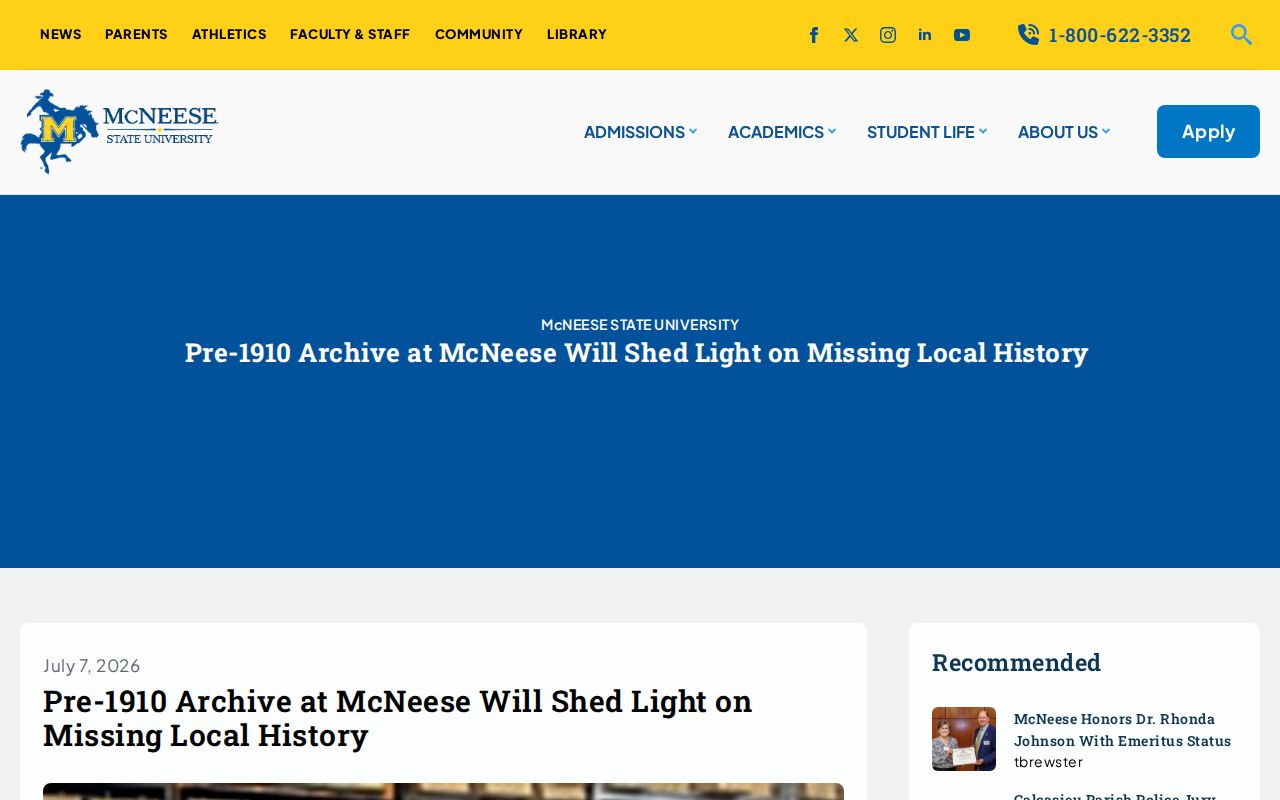
This new collection is a promising fallback, not proof that every item is already indexed online.
Lake Charles Past Household Trail
Owners are only half of a house history. Lake Charles directories can list a householder or business at a street number in one edition. Public census schedules can name a full household at the census date. Library obituaries, cemetery and church records, newspapers, and Clerk successions can connect a later death to relatives or heirs. The collection years and reading conventions are covered on the Lake Charles city directories page.
Pair the sources in a set order:
- Choose a dated directory edition just before and just after a known deed, sale, or map change.
- Copy the address exactly, including directional and suffix, and cite the edition and page.
- Locate the nearest public census year. Confirm the person, household, street, ward, or enumeration district rather than relying on a name alone.
- Search obituary, newspaper, cemetery, and succession sources for the named person and relatives.
- Build a timeline with one row per source. Leave a gap blank when no record supports it.
A criss-cross directory is arranged by address instead of surname. An enumeration district is the small area assigned to one census taker. Both can help when a name search fails, but neither cures a missing edition or an unreadable street label.
Lawful use. Research previous residents for family history, house history, estates, or personal curiosity. Never use an address trail to track, threaten, or harass a living person.
Lake Charles Obituary Endpoints
Calcasieu Library's genealogy service provides local directories, obituary help, cemetery and church records, land and courthouse material, and staff assistance. Send a defined address, surname, ward, and date range to Genealogy staff at 337-721-7110 or genstaff@calcasieulibrary.org. LSU newspaper holdings and the Maude Reid Scrapbook Index add leads when a web search is thin.
The Louisiana State Archives death index is useful for deaths old enough for archival access. The live search may support basic and advanced name fields, partial-name behavior, and sorting. See the historical death index before requesting a certified copy.
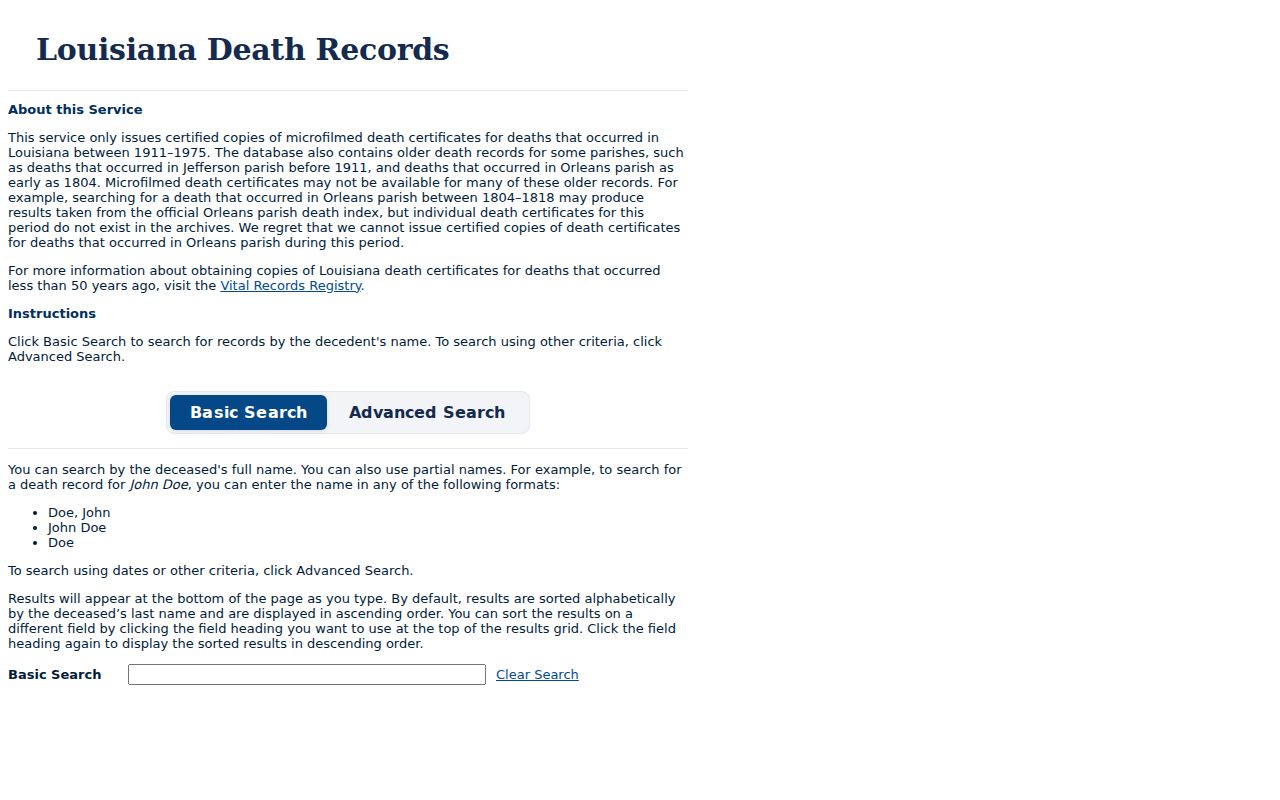
A death-index match is a lead. Confirm the identity through the certificate path, obituary, cemetery source, or a Calcasieu succession file.
Date Lake Charles Previous Residents
A finished address timeline should keep title, occupancy, and physical change in separate columns. Record the exact source date, name as printed, address or legal description, and what the item proves. A deed proves a property interest. A directory proves a listing in one edition. A census proves a household response at one census date. An aerial proves only that a visible place changed.
When online access fails, use the fallback network: Clerk archive and certified-copy desk, Calcasieu Genealogy Library, McNeese Archives, Louisiana State Archives, LSU newspaper microfilm, and the Library of Congress map collection. A tight request for one series, name, tract, and date range is more likely to succeed than an open request for all past residents.
Uncertainty belongs in the timeline. Mark an address mismatch, missing year, or possible same-name person as unresolved. That restraint makes the previous-resident record far more useful than a smooth story built on guesses.