
Finding Lake Charles Residents
A single detail opens many doors in southwest Louisiana. A name, a phone number, or a street address can point a Lake Charles residents directory search toward different public sources. Match the record to what is known. The parish property roll fits an address. The state voter tool suits a registered voter. The library's historical shelves hold older households. No source lists everyone. Owners and occupants can differ, dates rarely line up, and some personal details stay closed by law. Comparing two independent records gives a far sounder answer than trusting one online match as proof.
- Normalize the address and ZIP with the official USPS lookup.
- Check the Assessor by owner name or property address.
- Compare the parcel in the parish GIS viewer.
- Use voter, Clerk, court, or archive sources for a second dated match.
- Ask the record custodian when the needed index is not online.
Lake Charles Directory Offices
Lake Charles is the Calcasieu Parish seat, so key resident records converge downtown. They still do not sit in one database. The Clerk of Court serves as recorder and court-record custodian. The Assessor keeps the assessment roll and property search. The Registrar of Voters handles voter cards and certifications. The Louisiana Secretary of State runs the public lookup. City records follow a different route through the City Attorney's Office. The Lake Charles street directory explains the address search in depth.
Calcasieu Parish Clerk of Court
1000 Ryan Street
Lake Charles, LA 70601
337-437-3550
Calcasieu Parish Assessor
1011 Lakeshore Drive, Suite 101
Lake Charles, LA 70601
337-721-3000
Calcasieu Registrar of Voters
1000 Ryan Street, Room 7
Lake Charles, LA 70601
337-721-4000
Split the Lake Charles Index
One local quirk matters before paying for access to the Calcasieu Clerk's online services. Pick the right index family. Conveyances, mortgages, marriages, civil cases, criminal cases, plats, UCC filings, and miscellaneous records each follow a separate path. Each family has separate date coverage. The Available Dates display lists conveyances from 1987, mortgages from 1983, marriages from 1987, and plats from 1910. Some archival series reach 1893, 1908, or 1910. That display can change, so check it on the day you search.
| Known fact | Clerk route | Useful result |
|---|---|---|
| Owner or seller name | Conveyance index | Party, date, book/page, instrument |
| Suit party or number | ClerkConnect civil | Case listing and docket context |
| Marriage name | Marriage index | Indexed marriage reference |
| Parcel document | Plat or mortgage index | Recorded property reference |
Web copy is never the official record. For a certified copy or anything that must be relied upon, contact the Clerk or use the courthouse record itself. Free public tools can still narrow the name, date, and category first.
Current Lake Charles Directory Sources
Present-day sources list defined groups, not every person. Compare the listed role with the question being asked. An owner's name is a strong property lead. It is weak evidence of who sleeps at the address. A voter result is tied to registration and subject to Louisiana disclosure limits. A court or jail entry speaks only to that record and date. The Lake Charles resident lookup shows how to keep those identities separate.
| Local source | People represented | Record keeper | Public route |
|---|---|---|---|
| Assessment roll | Owners and mailing contacts | Calcasieu Parish Assessor | Free property search |
| Voter lookup | Registered voters | Louisiana Secretary of State | Name or address portal |
| Recorded instruments | Parties to filed documents | Calcasieu Parish Clerk | Online services or office |
| Meeting records | Named public participants | City or Police Jury | Agenda, archive, or request |
| Historical directories | Dated residents and businesses | Libraries and archives | Physical, database, or microfilm access |
Search Lake Charles Property Records
The Calcasieu Parish Assessor search accepts several entry points: parcel number, property address, section-township-range, subdivision, legal description, or owner name. Address mode works best when the goal starts with a house. Owner mode helps test a known name. A result can show parcel identity, physical and mailing addresses, ward, classification, values, and deeds. It can also show ownership history and homestead-related fields. Those details help distinguish two same-name matches. They also reveal whether the mailing address differs from the property itself.
The assessor's home screen is the official property-record entry point.
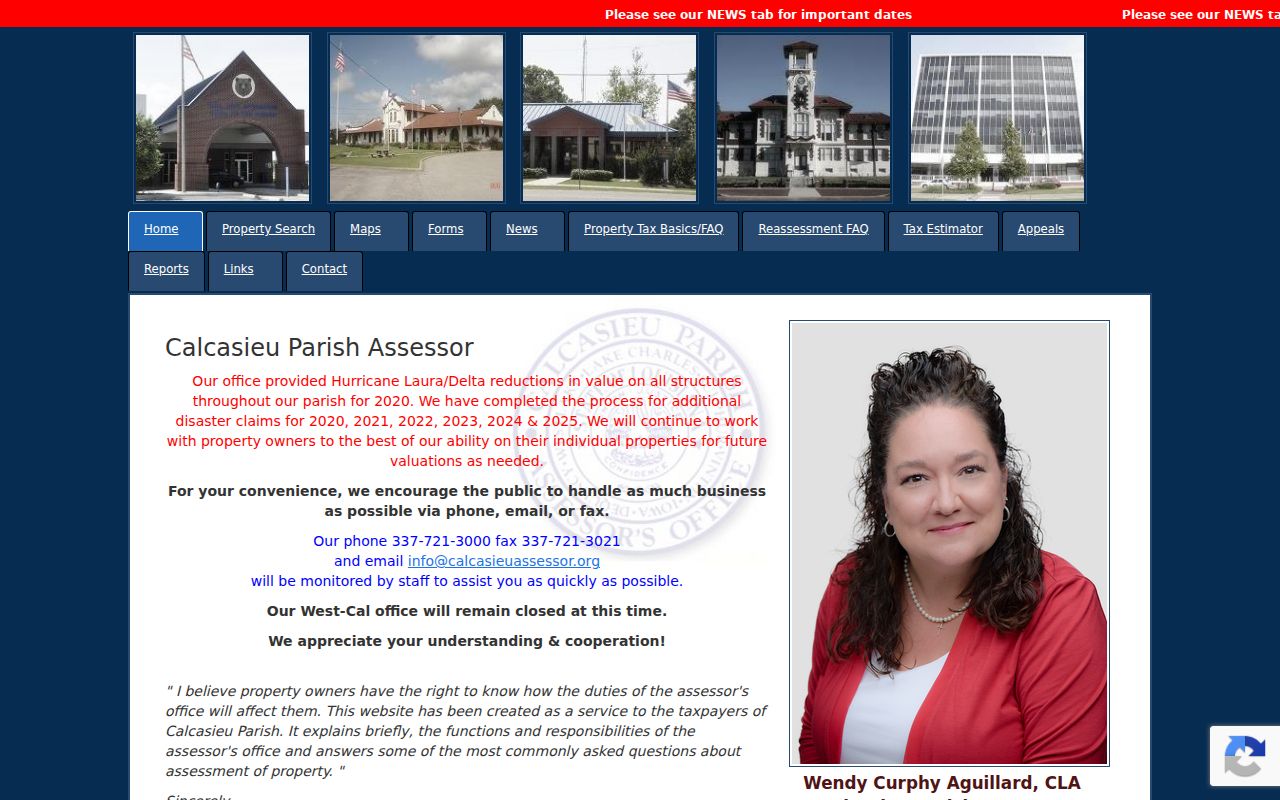
Treat that assessment result as a current lead only. Verify recorded ownership in the Clerk's conveyance record next. A tax roll is not proof of occupancy, and the GIS parcel outline is not a title opinion.
Verify Lake Charles Voter Leads
The Louisiana Voter Portal offers two useful paths. The voter form asks for first name, last name, ZIP code, birth month, and birth year. The address form is different. It uses ZIP, street, apartment or lot, and city controls. Those fields support a careful match. This works when the name and general location are already known. They should not be read as a complete street roster. A registration never proves present occupancy on the day of the search.
Louisiana R.S. 18:154 makes voter records generally available for inspection and copying. At the same time, it restricts sensitive fields, commercial circulation, and protected categories. The state's Address Confidentiality Program serves eligible survivors. It covers survivors of abuse, sexual assault, or stalking with a substitute address. Respect those limits. The official Louisiana Voter Portal is the proper starting point.
The portal's fields show why a ZIP matters. Other identifying details also matter before any match appears.
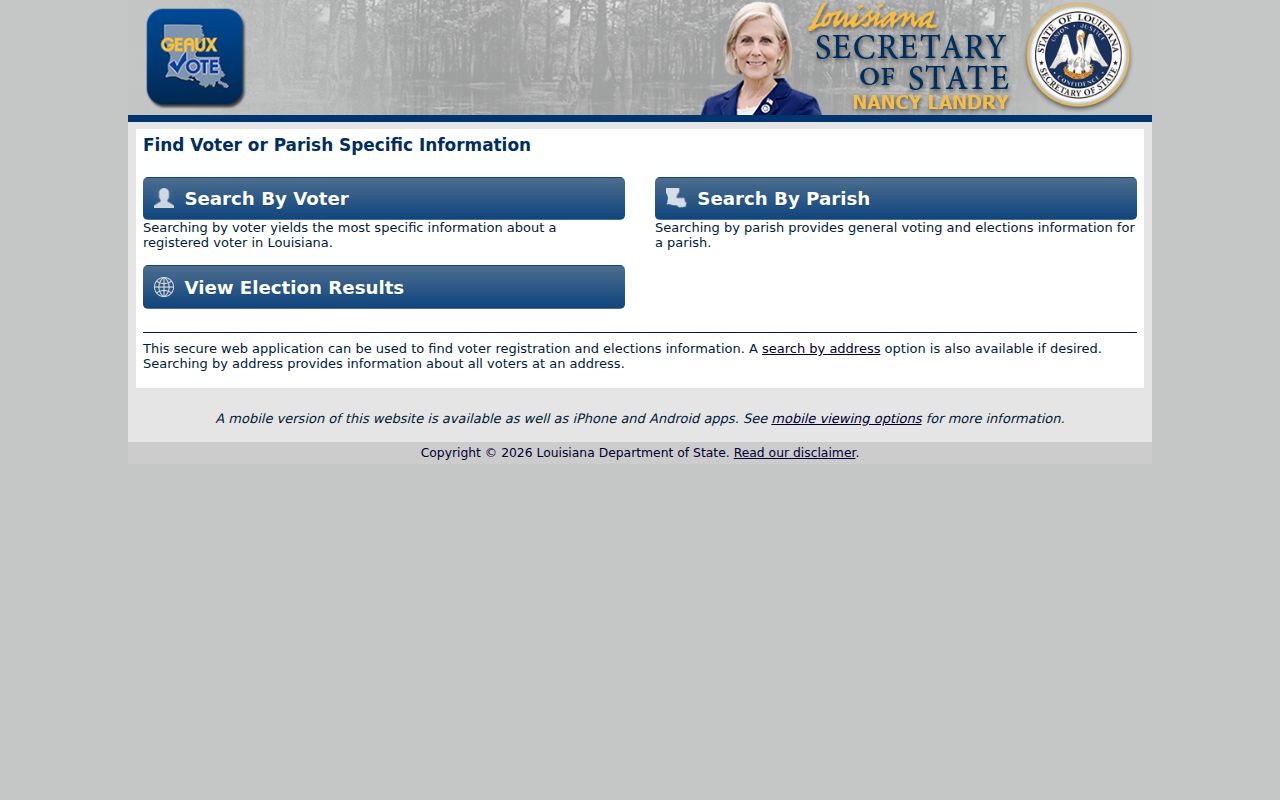
Record the search date and corroborate the result with another official source.
Separate Lake Charles Court Systems
Lake Charles has two separate court systems. Each is its own record custodian. City Court handles matters within its jurisdiction and runs its own request and copy process. The 14th Judicial District Court serves Calcasieu Parish. Its Clerk of Court maintains the civil and criminal records. Civil filings are searched through ClerkConnect. The Clerk's eSearch system covers criminal and land-record functions under its own access terms. A statewide Secretary of State suit-number form is more limited. PACER stays reserved for federal cases. The 14th Judicial District Court site provides the official district-court orientation.
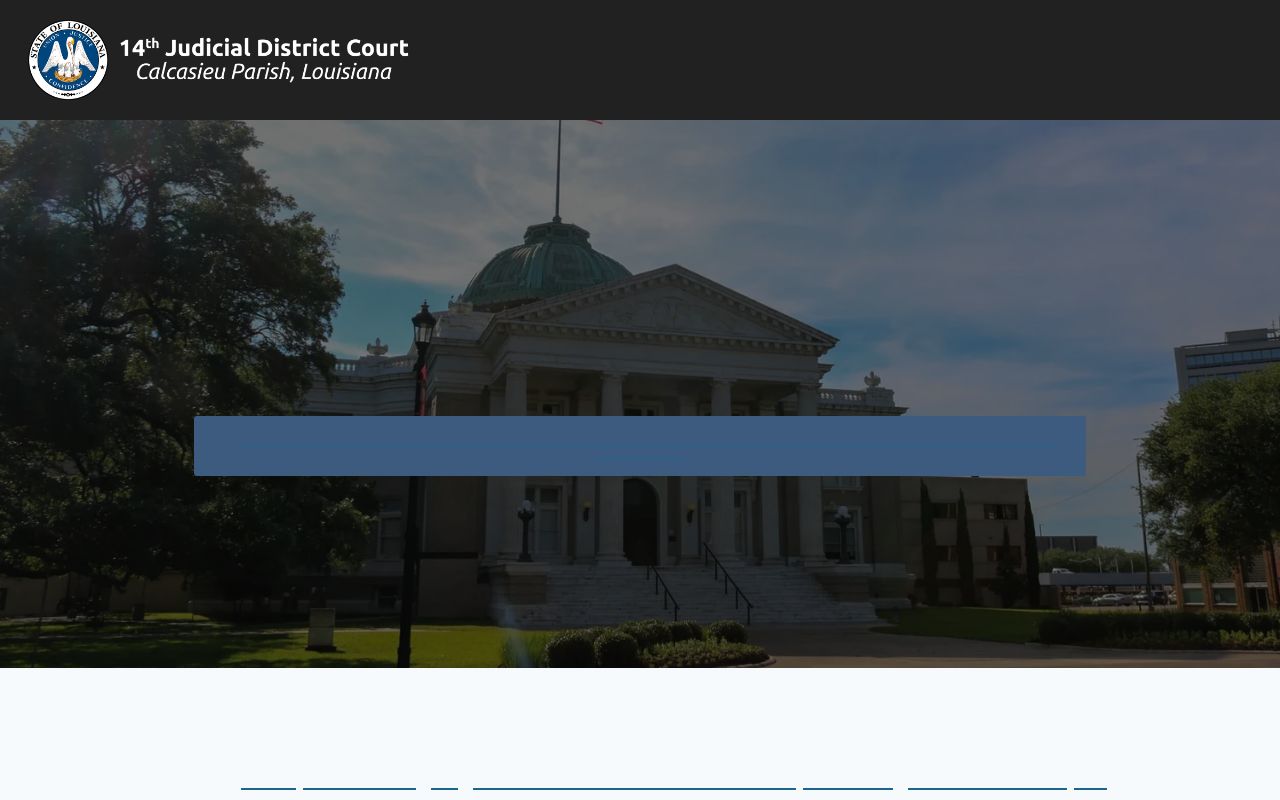
A case hit is a dated court record, not a verdict about anyone. Read the case type, the parties, the filing date, and the disposition before drawing any conclusion.
Historical Lake Charles Directory Trails
Older residents leave traces across a wide network. The Calcasieu Parish Library genealogy resources, McNeese Archives, Louisiana State Archives, LSU newspaper holdings, and Library of Congress maps all matter here. The earliest directory lead dates to 1895 or 1896. Microfilm editions then run through 1960, with gaps. A 1913 transcription sample survives as well. Obituary tools, newspapers, yearbooks, and a 1909 Sanborn set of 39 sheets complete the trail. The edition-by-edition method is laid out in the Lake Charles city directory collections. The Calcasieu Parish Library genealogy page introduces local obituary and southwest Louisiana holdings.
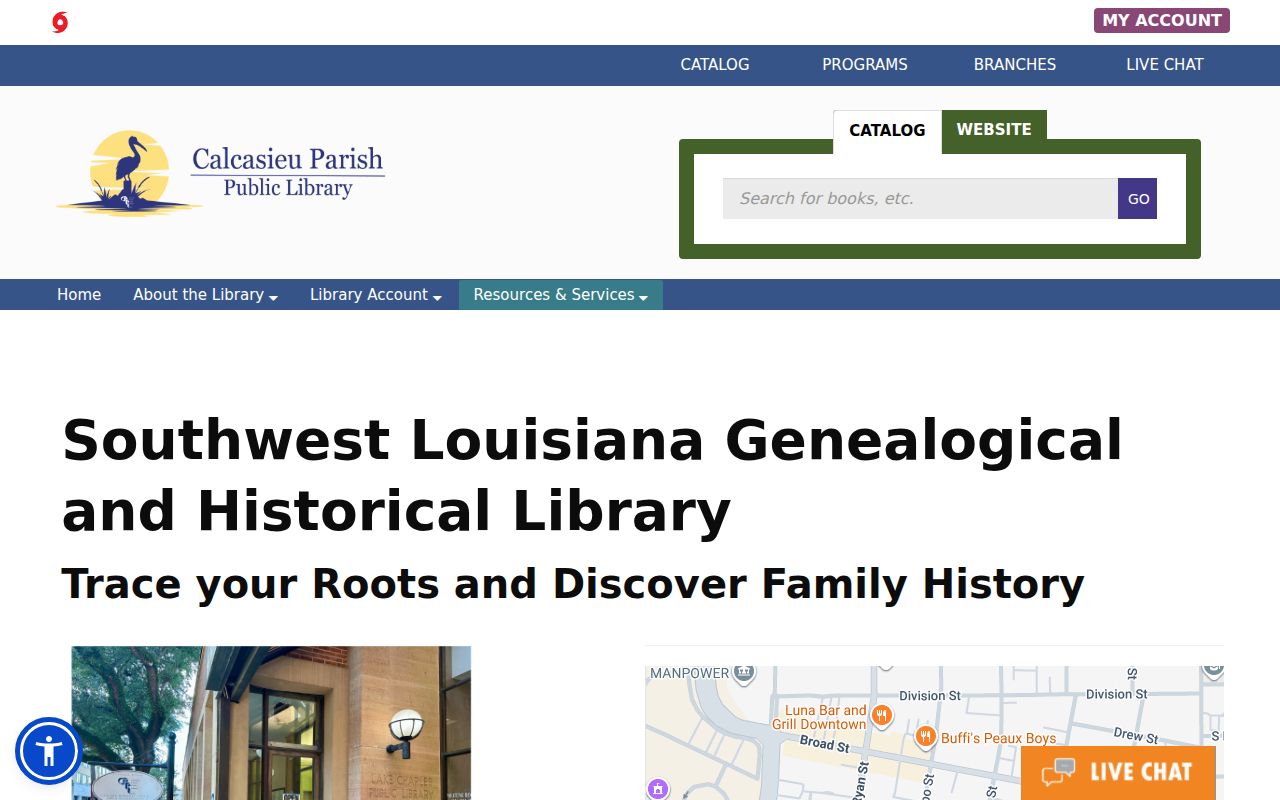
Cite the directory edition, page, and repository. Then compare the entry against a deed, newspaper date, map sheet, or census release instead of guessing at a missing year.
Bridge the Lake Charles Fire Gap
Early Lake Charles research hits a sharp break around the pre-1910 courthouse fire. The Clerk's broad archive description runs 1910 to 1985. Specialized series on the Available Dates page reach earlier. One announcement changed the picture. In July 2026, McNeese acquired the Loftin-Levingston collection. It holds pre-Fire title and courthouse abstracts or photocopies, maps, and cemetery material reaching into the 1840s. The collection is promising, but its public processing timeline means it cannot yet be called a fully searchable online catalog.
A pre-1910 name or property needs several repositories. Start with the Clerk's archive and category dates, then the genealogy library's physical material, State Archives, LSU newspapers, the 1909 Sanborn maps, and McNeese Archives. Contact staff directly. Give a name, date range, record series, and address. Specific requests give staff a better chance of locating material scattered across collections.
Route Lake Charles Records Requests
City and parish requests follow different paths. Lake Charles public records go through the City Attorney's Office and its written request form. Calcasieu Parish Police Jury minutes, ordinances, elections material, and related parish records sit with the Parish Records Department. Deeds, marriages, successions, and district-court files belong to the Clerk. Voter certifications go to the Registrar. Birth and death certificates follow state eligibility rules. Local issuance runs through the West Calcasieu office in Sulphur. The City public-records page explains the municipal request path.
Under the Louisiana Public Records Law, R.S. 44:1 et seq., ask the office that actually keeps the record. Name the record type. Give a practical date span, a relevant address or case number, and your preferred inspection or copy format.
Map Lake Charles Parcel Context
The Calcasieu Parish GIS viewer adds geography that no name index can show. Its public layers cover parcels, address and 911 points, street centerlines, subdivisions, zoning, flood information, city and town limits, wards, and political districts. Start from the known physical address. Select the parcel containing it. Note the parcel or PIN reference before moving to the Assessor or Clerk. Adjacent shapes help define the block. A nearby label should never become a claim about a current resident.
The viewer also carries a deep aerial sequence. Documented layers run 1940, 1953, 1963, 1974-75, 1981, 1983, 1998, and many later years through 2026. Those images show when roads, lots, or structures changed. Pair an aerial year with a deed date, a directory edition, or the 1909 Sanborn sheet. The map answers where. A name-bearing record still answers who.
Portal fields: search by address or place, use the parcel tools, turn on the relevant boundary or aerial layer, and record the map date. Visit the Calcasieu public GIS viewer directly. Contact parish GIS at 337-721-4140 when a layer or parcel cannot be interpreted.
Handle Lake Charles Vital Records
Louisiana keeps birth and death records closed. Births stay confidential for 100 years, deaths for 50. R.S. 40:41 sets the disclosure and access rules, and R.S. 40:36 allows older records to move to the State Archives. Current certificate requests involve eligibility, identification, payment, and waiting rules. A closed record is not proof the event never happened.
One local quirk saves a wasted trip. Calcasieu birth and death certificates come from the Clerk's West Calcasieu Office. It sits at 1300 East Napoleon Street in Sulphur, not the Lake Charles courthouse. That office serves weekdays. It stops taking applications before closing, so confirm hours and eligibility first. Statewide requests go through the Louisiana Department of Health Vital Records by mail, walk-in, online, or phone.
Historical deaths have their own path through the Louisiana State Archives index. It offers basic and advanced searching plus a certified-copy option. Marriage records sit apart. The Calcasieu Clerk's online index starts in 1987. Archival coverage runs back to 1910. The parish clerk that granted a divorce holds its decrees. Keep each event type, custodian, and access period separate when working the records.
Read Lake Charles Results Carefully
Label what each match in the Lake Charles records actually proves. USPS confirms a delivery format. GIS places a parcel and shows nearby geometry. The Assessor names an assessed owner and mailing contact. A Clerk instrument lists parties and a recording date. The voter tool reflects registration. A residents directory entry captures a household as published in one edition. None of that alone proves who lives at an address today.
Evidence rule: keep each source, date, role, and uncertainty separate; use public records only for lawful personal, historical, property, or civic research.
Conflicts are useful signals in a resident lookup. A different mailing address may reveal an absentee owner. A directory gap may call for a newspaper or deed. A changed parcel may explain why an old number no longer maps cleanly. When an official record is missing, say so and note the offices and indexes checked.
Start Free, Then Go Deeper
Start with the free official tools. USPS address lookup, the Assessor, parish GIS, the voter portal, the City agenda archive, Parish minutes, the Clerk's home-sales search, library resource pages, and State Archives indexes all cost nothing. These tools can narrow a vague name or address. You may land on a parcel, a date, a record category, or a repository. After that, weigh the deeper options. A Clerk subscription, certified copy, archive request, or in-person search may be worth it.
Commercial people-finder databases compile material from many places. They lag behind changes. They sometimes merge similar names. They cannot replace the official source. The custodian always holds the record's current context, access limits, and certification path. For genealogy, heirs, safety concerns, or reconnecting with family, use the smallest amount of information needed. A directory trail should serve the search itself. Never use one to stalk, harass, or harm anyone.